

Why Quick Action on Roof Leaks Saves Your Home and Wallet
To repair leaking shingle roof damage, you must identify the leak, gather the right tools, and follow systematic steps. Here’s a quick action plan:
Essential Steps to Repair a Leaking Shingle Roof:
- Locate the leak – Check the attic for water stains and trace them to the roof exterior.
- Gather tools – Pry bar, hammer, roofing nails, sealant, replacement shingles.
- Replace damaged shingles – Remove old shingles, install new ones, and seal with roofing cement.
- Fix flashing issues – Re-caulk gaps around vents, chimneys, and transitions.
- Repair underlayment – Patch any tears with 30# tarpaper and cement.
A leaking shingle roof is a stressful problem that can compromise your home’s structure if ignored. While the average roof repair costs around $1,200, early detection can keep costs in the $200-$1,000 range. Many common shingle leaks are manageable DIY projects, but knowing when to call professional roofing contractors can save time and money.
I’m Gerald Michaels, founder of Adept Construction. With nearly 30 years of roofing experience, I’ve helped many Illinois homeowners repair leaking shingle roof problems before they escalate. This guide will walk you through identifying leaks, gathering materials, and performing repairs safely.
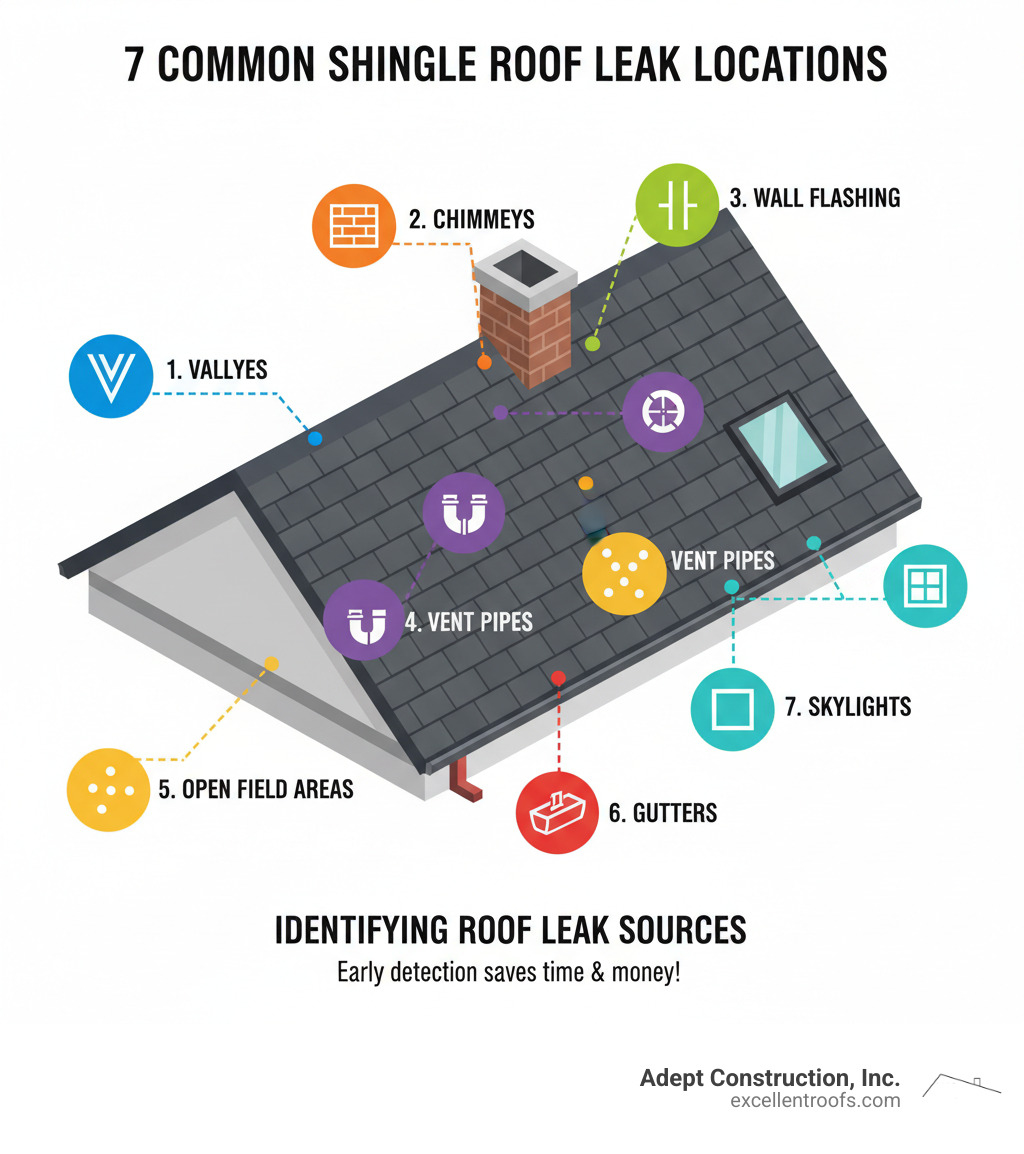
First Signs of Trouble: How to Spot and Pinpoint a Roof Leak
The first step to repair leaking shingle roof damage is recognizing the warning signs. Inside your home, look for water stains on ceilings or walls and musty odors in upper rooms, which signal hidden moisture.
From the ground, look for damaged, curled, or missing shingles. Also, check your gutters for granules; these sand-like particles indicate your shingles are aging and losing their protective layer.
An attic inspection is the most reliable way to find a leak. After a rain, use a flashlight to look for wet sheathing, dark streaks on rafters, or damp insulation. To pinpoint the exterior location, measure the distance from the interior wet spot to the nearest wall and use that measurement on the roof.
If the leak isn’t active, use the water test method. Have a helper in the attic while you wet sections of the roof with a garden hose, starting low and working up. When your helper sees a drip, you’ve found the source.
For hard-to-find leaks, try the magnet and compass trick. Tape a strong magnet under the roof deck near the suspected leak, then use a compass on the roof. The needle will point to the magnet, helping you find small nail holes.
For more detailed guidance, our Roof Leak Detection Naperville guide provides additional professional techniques.
While planning a permanent fix, temporary solutions like tarping or emergency sealant can protect your home. Secure a tarp with furring strips and screws, or use roofing cement for small holes, but remember these are temporary measures. Acting quickly on these signs is key, as water damage accelerates rapidly.
Gearing Up for the Fix: Essential Tools, Materials, and Safety Precautions
Before you repair leaking shingle roof issues, proper preparation is crucial. This involves gathering the right equipment and adhering to strict safety protocols.
What are the risks and safety precautions to consider when working on a roof?
Safety is the top priority when working at heights. Over 100 people die from ladder-related accidents in the US annually. Follow these essential safety rules:
- Work on a dry, non-windy day. Wet shingles are extremely slippery, and shingles can be brittle in cold or too soft in extreme heat.
- Ensure ladder stability. Place your ladder on a firm, level surface, extend it three feet above the roof edge, and secure the top.
- Wear non-slip footwear. Rubber-soled shoes provide necessary grip.
- Use a safety harness on steep roofs. It is mandatory for steep pitches and recommended if you feel unsure on any slope. Never work alone.
What tools and materials are necessary for repairing a leaking shingle roof?
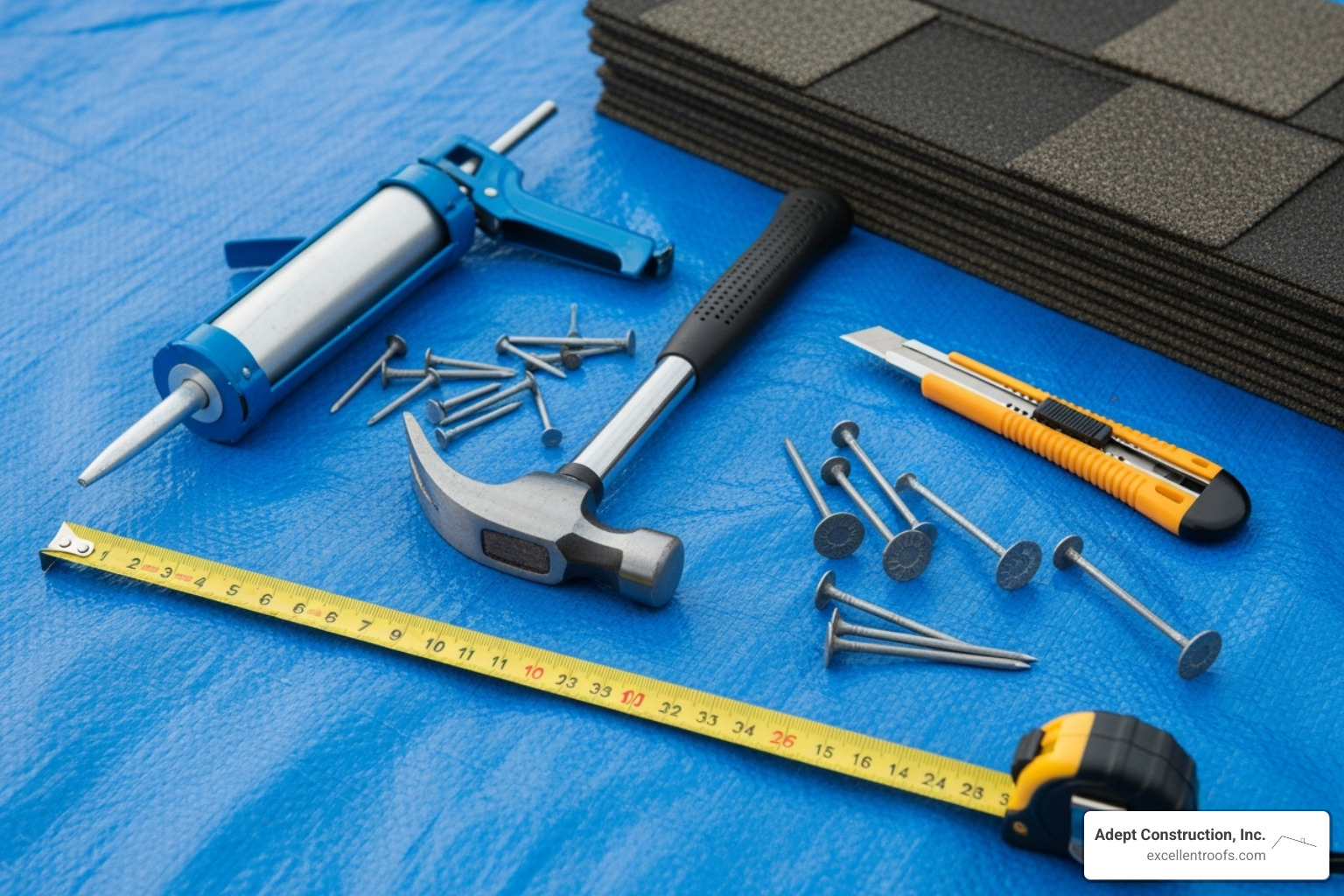
Having the right equipment makes the job safer and more effective. Gather these items before you start:
Essential Tools:
- Pry bar: A 15-inch flat bar for lifting shingles and removing nails.
- Hammer: For driving new roofing nails.
- Utility knife: For cutting shingles.
- Caulk gun: For applying roofing sealant.
- Tape measure and chalk line: For proper alignment.
Essential Materials:
- Matching asphalt shingles: To blend with your existing roof.
- 1 ¼-inch galvanized roofing nails: For corrosion resistance and holding power.
- Roofing sealant or cement: An asphalt-based product for sealing.
- 30# tarpaper: For repairing the underlayment, as it’s more durable than 15# paper.
The DIY Fix: A Step-by-Step Guide to Repair Leaking Shingle Roof
With your gear ready, it’s time to repair leaking shingle roof damage. Always start with the least invasive method to prevent unnecessary damage. For more local advice, see our guide to Repair Asphalt Shingle Roof Naperville, IL.
How to Replace Damaged or Missing Shingles
- Lift Surrounding Shingles: Carefully use a pry bar to break the adhesive seal on the shingles above and around the damaged one. Work slowly, especially in cold weather, to avoid cracking them.
- Remove the Damaged Shingle: Slide the pry bar under the damaged shingle to locate and pry out the roofing nails. For a stubborn nail, use the attic hammer-out trick: from the attic, gently tap the nail point with a hammer to push it up, making it easier to remove from above. Once the nails are out, slide the old shingle out and clean the area of debris.
- Prepare and Install the New Shingle: Slightly round the back corners of the new shingle with a utility knife to help it slide into place easily. Position the new shingle, aligning it with the others, and secure it with four 1 ¼-inch galvanized roofing nails just above the adhesive strip.
- Seal the Repair: Apply dabs of roofing sealant under the tabs of the new shingle and any others you lifted. Press them down firmly to ensure a watertight seal.
How to Repair Curled or Cracked Shingles Without Full Replacement
Not all damage requires a full replacement. For minor issues, a targeted repair can suffice.
- Curled Shingles: In warm weather, gently lift the curled edge, apply a thick bead of roofing sealant underneath, and press it down firmly. Weigh it with a brick for 24 hours. In cold weather, you may need to carefully warm the shingle with a heat gun to make it pliable, but exercise extreme caution.
- Cracked Shingles: Clean the area and apply roofing sealant into and over the crack. For a better cosmetic finish, sprinkle loose granules from your gutters onto the wet sealant to match the texture.
Fixing Leaks Around Flashing, Vents, and Chimneys
Leaks often occur where the roof meets other structures. These are critical areas to inspect.
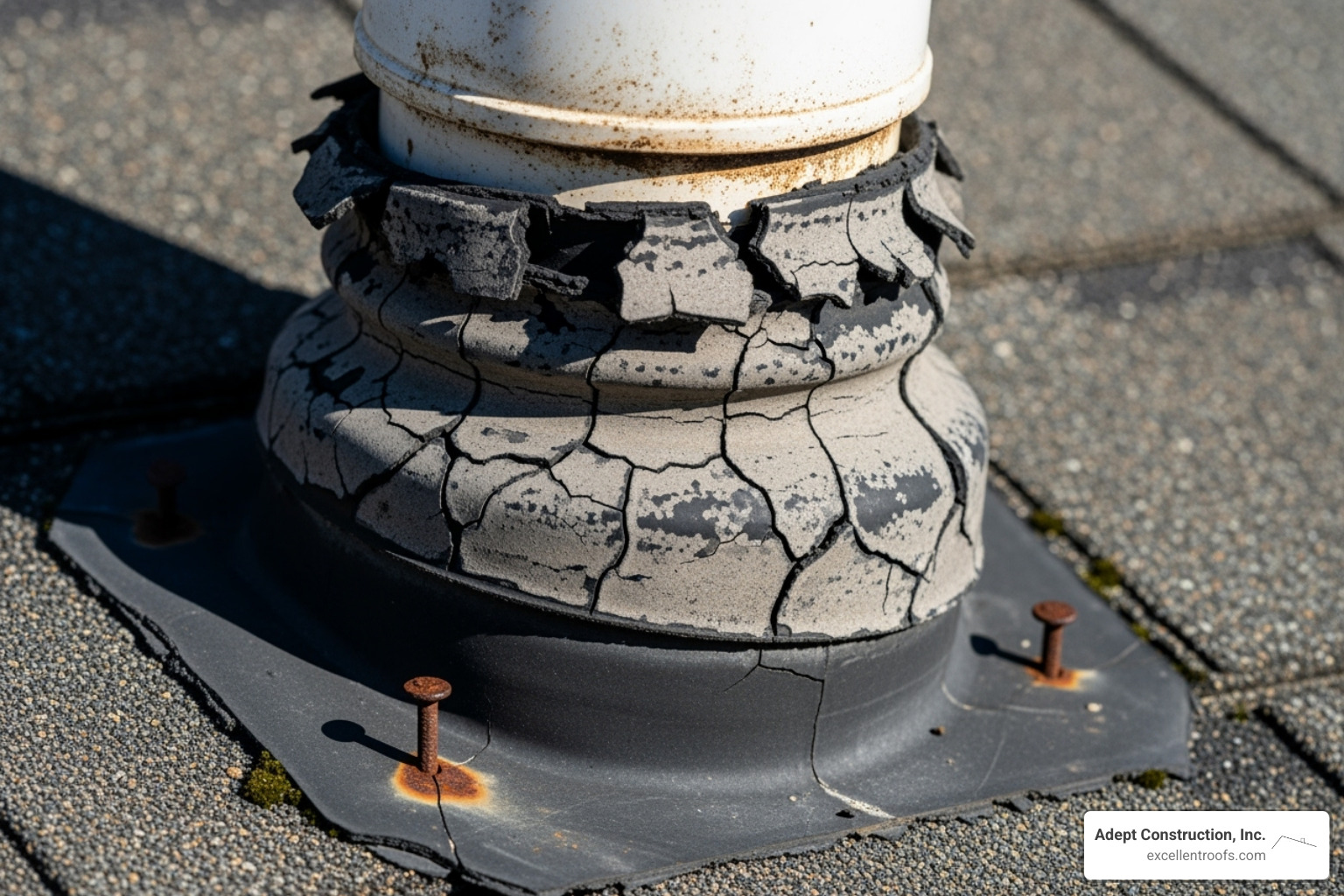
- Vent Pipes: Check the rubber boot around vent pipes for cracks or decay. If the metal flashing is intact, you may only need to replace the rubber boot.
- Chimneys and Walls: Inspect step-flashing for gaps. Clean the area and apply a new bead of roofing sealant to seal any openings. Also, check the chimney cap for cracks.
- Debris: Keep all flashing areas clear of leaves and debris, which can cause water to back up and seep under shingles.
The Importance of Underlayment in a Leaking Shingle Roof Repair
The underlayment is your roof’s secondary water barrier. Do not neglect it during a repair.
- Use Quality Material: For patches, use 30# tarpaper. It is more durable and tear-resistant than the standard 15# variety, making it ideal for repairs.
- Patching Tears: If you tear the underlayment, cut a patch of new 30# tarpaper that is larger than the tear. Slide it underneath the damaged area and seal the edges with roofing cement before installing the new shingle. This ensures your repair leaking shingle roof project is fully watertight.
DIY vs. Professional Repair: Knowing When to Call for Backup
Deciding whether to repair leaking shingle roof damage yourself or hire a professional is a critical choice. A successful DIY repair saves money, but a mistake can lead to a costly disaster.
When should I consider calling a professional roofer instead of attempting a DIY repair?
While DIY repairs are feasible for minor issues, some situations demand professional expertise. Call for backup if you encounter:
- Widespread Damage: If over 25-30% of your roof is damaged or you have multiple leaks, it may signal a systemic failure.
- Structural Issues: A sagging roof indicates problems with the underlying deck or rafters, which is not a DIY job.
- Steep Roof Pitch: Steep roofs are a major safety hazard and require professional equipment and training.
- Complex Leaks: Leaks around dormers, valleys, or intricate flashing are difficult to diagnose. Our residential roofing contractors are experts at this.
- Old Roof: If your roof is over 20 years old, a repair might be a temporary fix for a roof that needs replacement. Our guide can help you decide: Do You Need Roof Repair or Replacement?.
- Warranty Concerns: A DIY repair could void your roof’s warranty.
If you are uncomfortable at heights or unsure about any step, it is always safer to call a professional.
Understanding the Costs of Roof Leak Repairs
What are the potential costs associated with different types of roof leak repairs?
Repair costs vary based on complexity. The national average is around $1,200, but can range widely.
- Minor Repairs: Replacing a few shingles or sealing cracks can cost $200 to $1,000.
- Flashing Repairs: Fixing flashing around chimneys or walls typically costs $200 to $500.
- Vent Pipe Repairs: Replacing a failed vent boot can range from $750 to $1,250.
- Emergency Repairs: Expect surcharges of $100 to $300 for immediate service during storms.
- Interior Damage: Repairing water damage to drywall and insulation can add $1,200 to $5,000 or more to the total cost.
A professional inspection, costing $100 to $600, can identify issues early. For a local cost breakdown, see our Roof Repair Cost Near Me Guide.
When to Call a Professional for Roof Repair in Downers Grove or Naperville
As a family-owned business serving the Chicago suburbs for nearly 30 years, we pride ourselves on honest assessments. If you’re facing a challenging leak or want the peace of mind that comes with professional work, our certified contractors can help.
We provide lasting solutions for homeowners in our service areas, offering expert roof repair in Downers Grove, IL and roof repair in Naperville, IL. We offer free estimates with no pressure, giving you honest advice to make an informed decision about protecting your home.
Beyond the Patch: Proactive Maintenance to Prevent Future Leaks
The best repair leaking shingle roof is the one you never have to make. Proactive maintenance is your roof’s health checkup, saving you from costly repairs later.

What are the best practices for preventative maintenance to extend the life of my shingle roof?
Follow this maintenance checklist to protect your roof:
- Inspect Twice a Year: In spring and fall, use binoculars to check for missing, cracked, or curled shingles from the ground. Look for dark streaks that indicate algae or moss.
- Clear Debris: Remove leaves and branches from the roof surface, especially in valleys and around chimneys, which can trap water.
- Clean Gutters: Keep gutters clear to prevent water from backing up under shingles and causing rot.
- Trim Trees: Cut back overhanging branches to prevent them from rubbing against shingles or falling and causing impact damage.
- Check Sealant and Nails: Look for cracked sealant around flashing and vents, as well as any exposed or rusted nail heads. Re-seal them as needed.
- Prevent Ice Dams: In winter, ensure your attic is well-insulated and ventilated to prevent ice dams, which force water under shingles.
- Schedule Professional Inspections: Every few years, have a professional inspect your roof. They can spot subtle issues you might miss, preventing major problems.
For more maintenance insights and seasonal tips, check out our comprehensive Roofing Tips section.
Conclusion
A successful repair leaking shingle roof project hinges on early detection, proper technique, and a commitment to safety. While many minor repairs are suitable for a DIY approach, knowing your limits is just as important as knowing how to use the tools.
Simple fixes like replacing a few shingles or sealing cracks can save money. However, widespread damage, steep roofs, or complex leaks are best left to professionals. A botched DIY repair can lead to more extensive water damage, costing far more than an initial professional call.
At Adept Construction, Inc., our family-owned company has served homeowners in Naperville, Downers Grove, and the surrounding Chicago suburbs for nearly three decades. We provide honest assessments and expert workmanship. Whether you need a straightforward roof repair in Downers Grove, IL or comprehensive roof repair services in Naperville, our team is ready to help.
Don’t let a roof leak cause you stress. Contact us today for a free estimate. We will provide a clear, cost-effective solution to keep your home safe and dry.